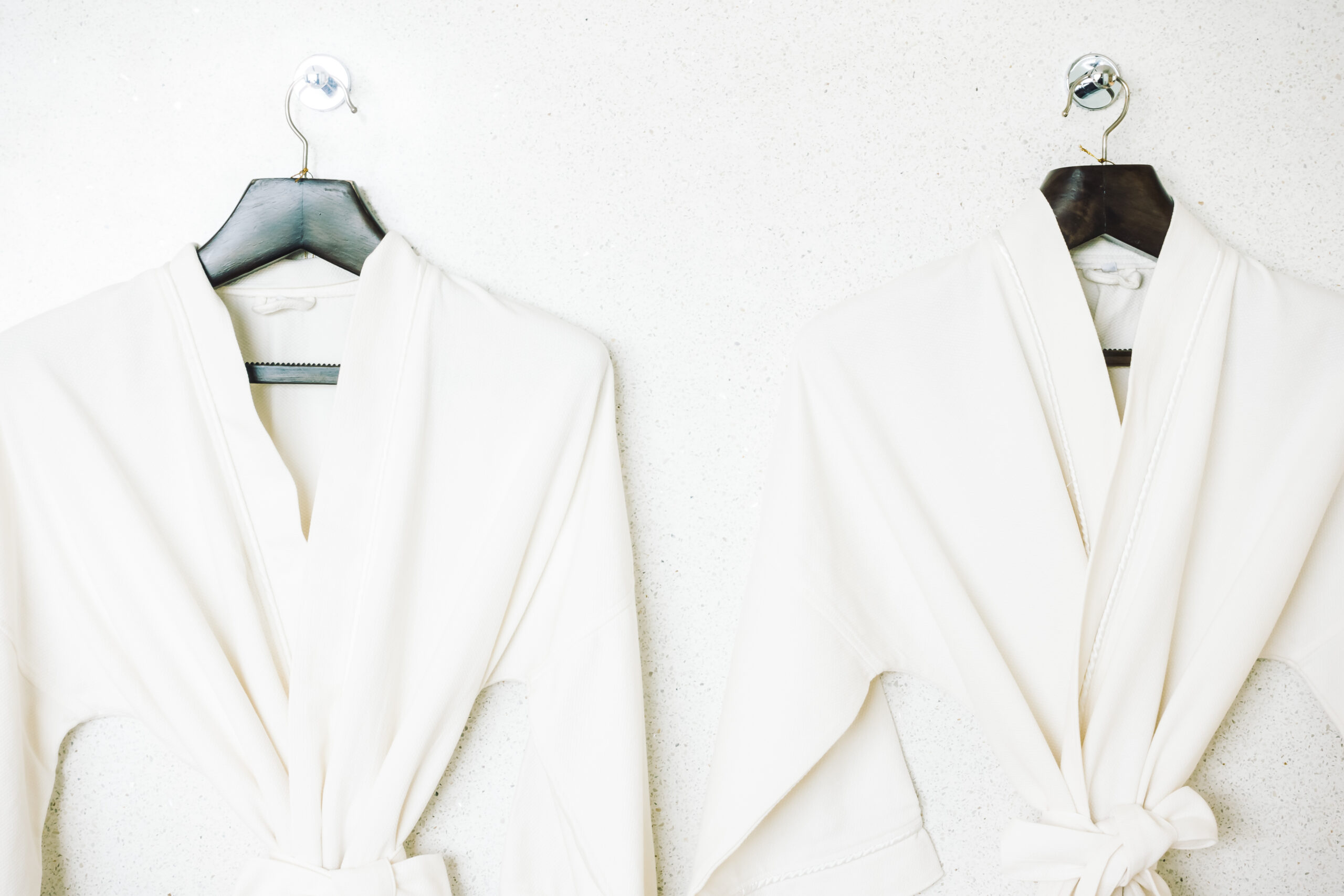
Choosing bath towels for hotels is not simply about finding the softest or thickest towel available. Hotels need towels that look premium, feel comfortable, absorb water effectively, survive frequent commercial washing, dry within a practical time, and remain consistent across hundreds or thousands of pieces.
A towel that feels excellent in a showroom may not perform well after repeated laundering. Likewise, a very high GSM towel may look luxurious but create higher drying costs and slower linen turnover. That is why experienced hospitality buyers look beyond appearance and consider GSM, cotton quality, towel size, construction, absorbency, durability, colour, laundering requirements, and total cost of ownership.
For most hotels, the right towel is not necessarily the heaviest one. It is the towel that provides the best balance between guest comfort, operational performance, durability, and cost.
This guide explains exactly what hotel owners, purchasing managers, housekeeping teams, resorts, spas, and hospitality suppliers should consider before ordering bath towels in bulk.
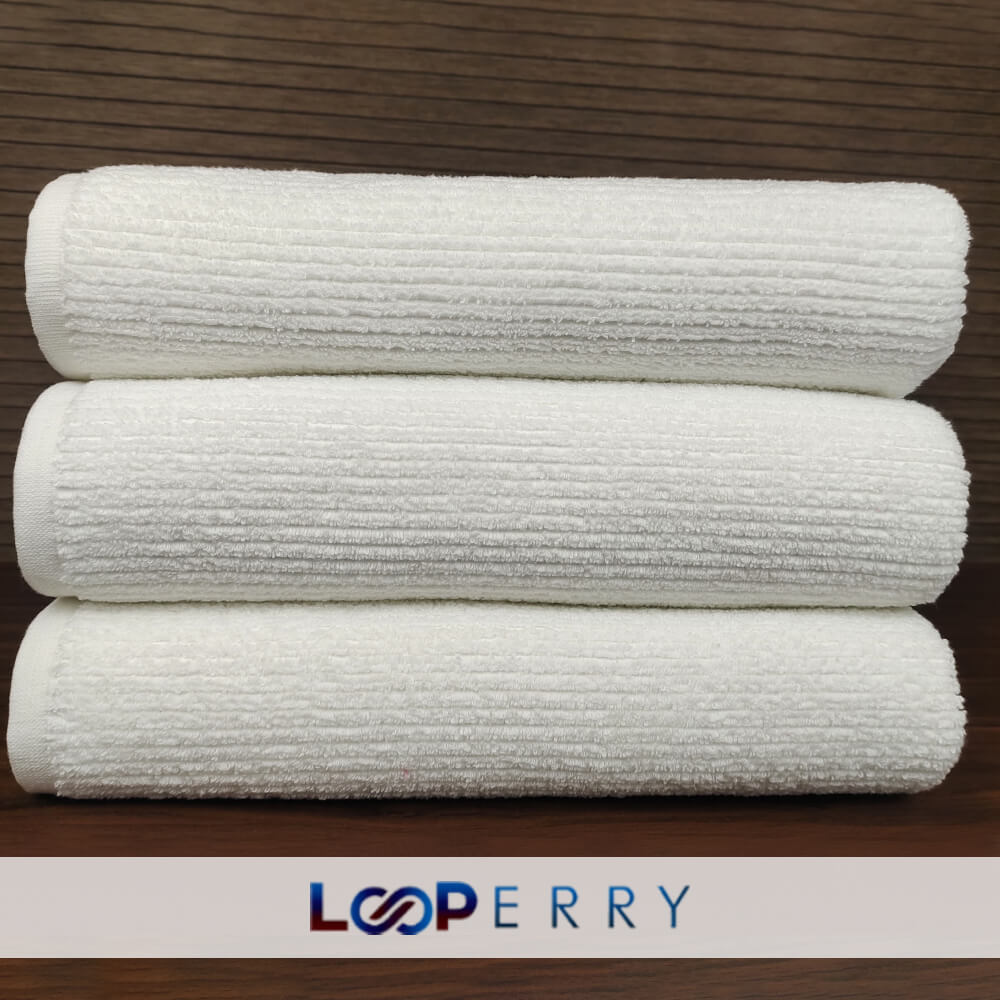
What Makes a Good Hotel Bath Towel?
A quality hotel bath towel should perform well in several areas at the same time.
It should be:
- Soft enough to provide a comfortable guest experience
- Absorbent enough to dry the body efficiently
- Durable enough to handle repeated commercial laundering
- Dense enough to feel substantial without becoming unnecessarily heavy
- Fast enough to dry for the property’s laundry operation
- Consistent in size, colour, GSM, and construction
- Finished with strong hems and secure stitching
- Suitable for the hotel’s washing and drying process
The important thing is that these characteristics work together.
For example, increasing GSM usually adds weight and absorbency, but it can also increase drying time. A towel made from better-quality yarn can provide a softer and more durable result without simply increasing fabric weight.
Current hospitality buying guides similarly emphasise that GSM should be considered alongside cotton quality, laundering durability and cost-per-use rather than treated as a standalone measure of quality.
That is why hotel towel sourcing should start with the property’s actual requirements rather than a single number on a specification sheet.
What Does GSM Mean in Hotel Towels?
GSM stands for grams per square metre. It describes the weight of the towel fabric over a standard square-metre area.
In simple terms, GSM gives buyers an indication of how lightweight or dense a towel is.
Generally:
- Lower GSM towels are lighter and tend to dry faster.
- Medium GSM towels provide a balance of weight, absorbency and drying performance.
- Higher GSM towels feel thicker, heavier and more luxurious but usually require more drying time.
A useful starting point for hotel buyers is:
| GSM | General Feel | Common Application |
| 300–400 GSM | Lightweight | Budget properties, gyms, high-turnover facilities |
| 400–500 GSM | Medium weight | Economy and standard hospitality |
| 500–550 GSM | Plush but practical | Premium hotels and boutique properties |
| 550–650 GSM | Heavy and luxurious | Upscale hotels, resorts and spas |
| 650+ GSM | Very plush | Luxury suites and premium spa environments |
These ranges should be treated as practical guidelines rather than universal hotel standards. Actual requirements depend on room category, climate, laundry equipment, guest expectations and purchasing budget.
Several current hospitality guides place roughly 500–550 GSM in the practical premium-hotel range, while 600 GSM and above is often selected where a more luxurious, heavyweight experience is desired.
Is Higher GSM Always Better?
No.
This is one of the most common mistakes when buying hotel towels.
A 700 GSM towel may feel wonderfully thick, but that does not automatically make it better than a well-made 550 GSM towel. The heavier towel contains more material and generally requires more water and energy to wash and dry.
For a hotel with high room turnover, laundry efficiency matters.
Imagine a property processing hundreds of towels every day. Even a small difference in drying time can become significant when multiplied across the entire laundry operation.
For this reason, the best hotel bath towel GSM is the one that matches the property’s priorities.
If the goal is a premium guest experience without excessive laundry burden, a medium-heavy towel around 500–600 GSM can be a strong starting point.
What GSM Is Best for Hotel Bath Towels?
There is no single GSM that is perfect for every hotel.
However, for many properties, 500–600 GSM provides a practical balance between comfort, absorbency, appearance and operational efficiency.
400–450 GSM
This range is useful when speed, affordability and easy handling are important.
It can work well for:
- Budget hotels
- Hostels
- High-turnover properties
- Gyms
- Vacation rentals
- Staff facilities
The towel is lighter and generally easier to wash, move and dry.
500–550 GSM
This is one of the most versatile choices for hospitality.
It provides enough weight to feel premium while avoiding some of the operational disadvantages of very heavyweight towels.
It can suit:
- Business hotels
- Boutique hotels
- Premium guest rooms
- Bed and breakfasts
- Vacation properties
- Standard hotel bathrooms
550–650 GSM
This range is particularly attractive for properties looking for a more luxurious guest experience.
It can work well for:
- Upscale hotels
- Resorts
- Spa properties
- Luxury vacation rentals
- Boutique hospitality brands
The trade-off is additional weight and potentially longer drying times.
650+ GSM
Very high GSM towels can provide an exceptionally plush feel, but they should be selected carefully.
They are more appropriate when the property’s brand positioning supports a luxury towel experience and the laundry operation can comfortably handle the additional weight.
The key lesson: don’t buy the highest GSM available simply because the specification looks impressive.
Which Cotton Is Best for Hotel Bath Towels?
After GSM, fiber and yarn quality are among the most important considerations.
Cotton remains a popular choice for hotel towels because it combines softness, absorbency and comfort. However, the word “cotton” alone does not tell a buyer enough.
Different cotton qualities and yarn constructions can produce noticeably different results.
Common options include:
- 100% cotton
- Ring-spun cotton
- Combed cotton
- Long-staple cotton
- Turkish cotton
- Egyptian cotton
- Cotton-polyester blends
100% Cotton
For guest-facing hotel towels, 100% cotton is widely preferred because of its natural softness and absorbency.
It also provides the familiar terry-towel feel that guests expect from hospitality properties.
For buyers focused on comfort and a premium presentation, 100% cotton bath towels are often a strong choice.
Combed Cotton
Combing removes many shorter fibres from the cotton before spinning.
The result is generally a smoother yarn with a more consistent feel.
Combed cotton can be particularly attractive for hotel towels because buyers are looking for:
- Smooth texture
- Soft hand feel
- Reduced short-fibre content
- Consistent appearance
- Good durability
Ring-Spun Cotton
Ring-spun yarn is produced by twisting and thinning fibres into a finer yarn.
This can create a softer and stronger textile compared with some lower-cost yarn constructions.
For hospitality applications, ring-spun cotton is often considered when the property wants a balance of softness and durability.
Turkish Cotton
Turkish cotton is known for its long fibres and softness. It is commonly used in premium towels and bath textiles.
It can be a good option when a hotel wants a luxurious feel while maintaining practical absorbency and durability.
Egyptian Cotton
Egyptian cotton is traditionally associated with long-staple fibres and premium textile products.
It can offer a very soft and luxurious hand feel, but the higher material cost means that it is usually more appropriate for premium or luxury positioning rather than every hotel budget.
Cotton Blends
Cotton-polyester blends can provide advantages in certain commercial environments.
They can be useful where buyers prioritise:
- Faster drying
- Lower cost
- Reduced shrinkage
- Easy maintenance
- High turnover
However, a blend may not provide exactly the same luxurious feel as a premium 100% cotton terry towel.
The right choice depends on whether the hotel’s priority is luxury, durability, speed, price, or a combination of these factors.
Ring-Spun vs Combed Cotton: Which Should Hotels Choose?
It is important to understand that these terms describe different stages or characteristics of yarn production and can work together.
A towel can be made using ring-spun, combed cotton yarn, combining the benefits of both processes.
Instead of asking only whether a towel is “ring-spun” or “combed”, hotel buyers should ask suppliers for the complete yarn specification.
Useful questions include:
- What is the fibre composition?
- Is the cotton combed?
- Is the yarn ring-spun?
- What is the staple length?
- What GSM is available?
- How does the towel perform after repeated washing?
- What finishing process is used?
This approach gives procurement teams a much clearer picture of the actual product.
What Is the Best Size for Hotel Bath Towels?
Towel size directly affects guest comfort and operational costs.
A towel that is too small may feel inadequate, while an oversized towel can consume more fabric, storage space and drying capacity.
A common hotel bath towel size is approximately:
27–30 inches × 54–58 inches
The exact dimensions vary between manufacturers and markets.
For properties wanting greater coverage and a more luxurious experience, bath sheets provide a larger alternative.
A bath sheet can be approximately:
35–40 inches × 60–70+ inches
Again, dimensions vary by supplier.
Bath Towel vs Bath Sheet
| Feature | Bath Towel | Bath Sheet |
| Size | Standard | Larger |
| Coverage | Good | Excellent |
| Storage | Easier | Requires more space |
| Laundry load | Lower | Higher |
| Guest experience | Practical | More luxurious |
| Best for | Most hotel rooms | Luxury rooms, spas, resorts |
Hotels do not necessarily need to replace every bath towel with a bath sheet.
A smart approach is to offer bath sheets in premium suites, spa areas or selected room categories while keeping standard bath towels in regular rooms.
How Important Is Towel Construction?
Very important.
Two towels with identical GSM can perform differently because of differences in:
- Yarn quality
- Loop construction
- Pile height
- Stitching
- Border construction
- Weave density
- Finishing
- Dyeing process
A quality terry towel contains loops that create additional surface area for absorbing moisture.
The loops should remain secure during repeated washing.
Look at the Hems
The edges of a hotel towel receive considerable stress.
Weak hems can lead to:
- Fraying
- Loose threads
- Shape distortion
- Premature replacement
When reviewing samples, inspect the side and end hems carefully.
The stitching should look consistent and secure rather than loose or uneven.
Check the Loops
The terry loops should have a consistent appearance across the towel.
Look for:
- Even pile
- Consistent density
- No obvious bald patches
- Minimal loose loops
- Clean finishing
A good supplier should be able to explain how the towel construction is designed for commercial use.
Absorbency Matters More Than Extreme Thickness
The primary function of a bath towel is to absorb moisture.
A towel can be extremely thick and still be disappointing if the yarn, loops or finishing are not well engineered.
When evaluating absorbency, consider the relationship between:
fibre + yarn + loop construction + GSM + finishing
rather than GSM alone.
Higher GSM can contribute to increased absorbency because there is generally more material available to hold moisture. However, fibre quality and construction also play major roles.
This is why a well-made 550 GSM towel can outperform a poorly constructed 650 GSM towel.
How Durable Should Hotel Towels Be?
Hotel towels have a much harder life than household towels.
A home towel may be washed weekly.
A hotel towel can enter the laundry system repeatedly over a much shorter period, particularly in busy properties.
Commercial laundering may involve:
- Higher temperatures
- Stronger detergents
- Industrial washing machines
- Mechanical agitation
- High-speed extraction
- Commercial tumble drying
- Frequent folding and handling
The towel therefore needs to be designed for repeated use.
A hospitality buyer should not judge durability from the first impression.
Instead, ask:
How does the towel perform after repeated laundering?
A quality supplier should be able to provide information about the towel’s intended commercial application and laundering requirements.
Current hotel towel sourcing guidance also emphasises laundering durability because towels are among the most frequently washed textiles in hospitality operations.
Why Commercial Laundering Should Influence Your Purchase
Laundry is one of the biggest hidden factors in hotel towel costs.
The purchase price is only one part of the equation.
Consider the complete lifecycle:
Purchase price → washing → drying → storage → replacement → disposal
A cheap towel that requires frequent replacement may cost more over time than a higher-quality towel with a longer useful life.
Similarly, an extremely heavy towel may increase drying requirements enough to affect operating costs.
That is why hotel procurement teams should evaluate cost per use, not just cost per piece.
A Simple Cost-per-Use Approach
Suppose:
- Towel A costs less but wears out sooner.
- Towel B costs more but lasts significantly longer.
Towel B may actually be the better investment if it reduces replacement frequency.
The same applies to drying performance.
A slightly lighter towel may have a higher purchase price but lower ongoing laundry costs.
This is why the cheapest towel is not always the cheapest solution.
White vs Coloured Hotel Bath Towels
White remains a classic hotel choice because it creates a clean, consistent and professional visual appearance.
It also works well with almost every bathroom design.
However, coloured towels can be useful for:
- Spas
- Gyms
- Boutique hotels
- Wellness centres
- Vacation rentals
- Modern hospitality brands
Looperry’s existing research on charcoal grey vs white towels highlights how property type, guest expectations, appearance and laundry considerations can influence the colour decision.
Why Hotels Often Choose White
White towels offer:
- A classic appearance
- Easy visual inspection
- Simple coordination with white bedding
- Strong association with cleanliness
- Consistent presentation
When Dark Towels Can Work
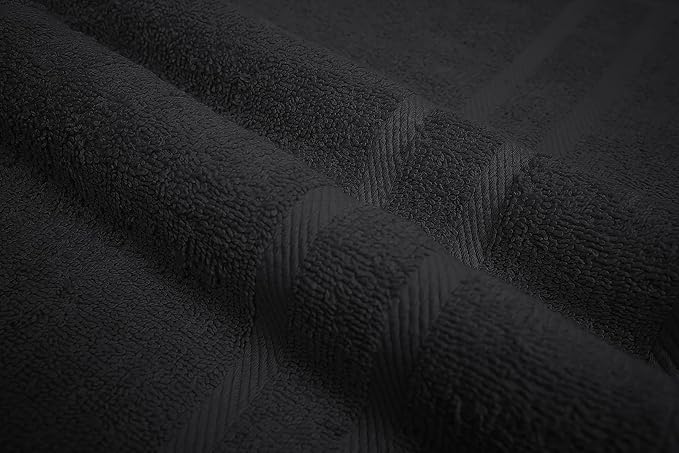
Dark or charcoal towels can provide:
- Modern styling
- Better visual concealment of some stains
- Distinctive spa branding
- A contemporary appearance
However, colour should never replace proper laundry controls.
A dark towel can hide visible marks, but it does not make an improperly cleaned towel hygienic.
What Colour Is Best for Luxury Hotels?
For traditional luxury hospitality, white remains one of the safest choices.
Guests often associate white towels with cleanliness, freshness and premium hotel standards.
That does not mean every luxury property must use white.
Boutique hotels and lifestyle properties may deliberately use:
- Charcoal
- Taupe
- Beige
- Stone
- Sage
- Navy
The best choice should support the hotel’s overall interior design and brand identity.
How Many Bath Towels Does a Hotel Need?
Hotel towel purchasing should account for more than the number of rooms.
A property needs enough inventory to support:
- Guest use
- Laundry rotation
- Housekeeping operations
- Peak occupancy
- Unexpected damage or loss
Hotels commonly maintain par levels rather than purchasing exactly one towel per guest room.
The exact quantity depends on:
- Number of rooms
- Maximum occupancy
- Laundry frequency
- On-site or outsourced laundry
- Turnaround time
- Room cleaning schedule
- Towel replacement policy
For example, a hotel with 100 rooms does not necessarily need only 100 bath towels.
If rooms are occupied and towels are being washed at the same time, additional stock is required to keep the operation running.
The correct inventory level should therefore be calculated with the property’s actual laundry cycle in mind.
What Should Hotels Ask a Towel Supplier?
Before placing a bulk order, procurement teams should request a clear specification sheet.
Ask for:
1. Fabric Composition
Confirm whether the towel is:
- 100% cotton
- Ring-spun cotton
- Combed cotton
- Cotton-polyester blend
- Another fibre composition
2. GSM
Ask for the exact GSM and acceptable production tolerance.
3. Dimensions
Confirm finished size after laundering, not just the pre-wash measurement.
4. Yarn Specification
Ask about the yarn construction and fibre quality.
5. Colourfastness
If ordering coloured towels, ask how the dye performs under the property’s expected washing process.
6. Shrinkage
Some shrinkage can occur after washing.
The supplier should be able to provide expected shrinkage information.
7. Commercial Laundry Suitability
Ask whether the towel has been developed specifically for hospitality or institutional use.
8. Customisation
For branded hotels or hospitality groups, ask whether the supplier provides:
- Custom colours
- Embroidery
- Jacquard logos
- Private labels
- Custom packaging
- Custom sizes
- Custom GSM
9. Minimum Order Quantity
MOQ can significantly affect the suitability of a supplier for smaller hotels.
10. Samples
Always request samples before committing to a large production order.
Why Hotel Towel Samples Matter
Photos cannot tell you everything about a towel.
A sample allows the buyer to evaluate:
- Actual softness
- Weight
- Thickness
- Absorbency
- Stitching
- Size
- Colour
- Loop quality
- Edge finishing
More importantly, buyers can wash the sample before placing a large order.
This is one of the most useful quality-control steps in hotel towel sourcing.
A Practical Sample Test
Before approving the product, wash the sample according to the property’s actual laundry process.
Then compare:
- Appearance before and after washing
- Size change
- Softness
- Absorbency
- Loose threads
- Colour changes
- Edge condition
- Drying time
If the towel performs well after washing, the buyer has much more useful information than they would get from simply touching a new towel.
Common Mistakes When Buying Hotel Bath Towels
Mistake 1: Choosing the Highest GSM
Higher GSM can feel luxurious, but it can also increase weight, storage requirements and drying time.
Choose based on the hotel’s operation.
Mistake 2: Looking Only at Price
The lowest unit price does not necessarily produce the lowest overall cost.
Consider replacement frequency and laundry performance.
Mistake 3: Ignoring Yarn Quality
GSM cannot tell you everything about softness and durability.
Always ask about fibre and yarn construction.
Mistake 4: Buying Without Samples
A bulk order should not be based entirely on catalogue photographs.
Test physical samples first.
Mistake 5: Ignoring Laundry Equipment
A towel suitable for one laundry operation may not be ideal for another.
Consider washer capacity, dryer capacity, temperatures and turnaround requirements.
Mistake 6: Ordering the Wrong Size
Large towels require more storage and laundry capacity.
Small towels may disappoint guests.
Choose sizes according to the hotel’s room category and operational requirements.
Mistake 7: Forgetting Replacement Stock
Even high-quality towels eventually need replacement.
Hotels should have a replacement strategy rather than waiting until linen stock becomes visibly worn.
Hotel Bath Towels vs Home Bath Towels
Although they may look similar, hotel towels often have different requirements.
| Feature | Hotel Towels | Home Towels |
| Washing frequency | High | Lower |
| Durability | Critical | Important |
| GSM | Selected for operation | Selected for preference |
| Colour consistency | Important | Personal preference |
| Replacement planning | Essential | Less structured |
| Bulk purchasing | Common | Usually smaller quantities |
| Laundry efficiency | Very important | Moderate |
| Customisation | Often available | Less common |
A hotel towel must work within an entire operational system.
The purchasing decision therefore involves more than comfort.
How to Choose Towels for Different Hotel Types
Budget Hotels
Prioritise:
- Practical GSM
- Durability
- Fast drying
- Competitive pricing
- Easy maintenance
A lightweight or medium-weight towel may make more sense than an ultra-plush option.
Business Hotels
Business hotels need a reliable balance.
A medium-heavy towel around 500–550 GSM can provide a professional guest experience without excessive operational weight.
Boutique Hotels
Boutique properties have more freedom to use towel specifications as part of their brand identity.
They may select:
- Premium cotton
- Higher GSM
- Custom colours
- Embroidered logos
- Luxury bath sheets
Luxury Hotels
Luxury hotels can prioritise:
- Premium cotton
- Higher GSM
- Larger dimensions
- Exceptional softness
- Consistent white or custom colours
- Premium finishing
But even luxury hotels should consider laundry performance.
Spas and Wellness Centres
Spas often need towels that combine softness with manageable drying time.
Depending on the application, medium-to-heavy towels can work well.
Dark colours may also be considered for selected treatments and facilities.
What Is the Best Towel for a 5-Star Hotel?
There is no universal five-star towel specification.
However, a premium five-star property will generally look for a combination of:
- High-quality cotton
- Strong terry construction
- Medium-heavy to heavyweight GSM
- Excellent absorbency
- Soft hand feel
- Durable hems
- Consistent sizing
- Good colourfastness
- Commercial laundry performance
A 550–650 GSM towel can be a useful starting point for luxury properties, but the final choice should be tested against the hotel’s laundry process and guest expectations.
The most expensive towel is not necessarily the best.
The best five-star towel is one that feels luxurious to the guest and remains operationally practical for the hotel.
Should Hotels Buy Bath Sheets Instead of Bath Towels?
Bath sheets provide greater coverage and can create a more luxurious experience.
They can be particularly attractive for:
- Luxury suites
- Resorts
- Spas
- Premium vacation rentals
- Executive rooms
However, they require more material and storage space.
They can also increase laundry loads.
A practical strategy is to use standard bath towels throughout the property and reserve bath sheets for premium room categories.
Sustainability and Hotel Towel Purchasing
Sustainability is becoming increasingly relevant to hospitality procurement.
Hotels can reduce textile waste by selecting towels that are durable enough to remain useful through repeated laundering.
Other considerations include:
- Responsible cotton sourcing
- Efficient dyeing
- Reduced water use
- Lower-impact production
- Recyclable packaging
- Long product life
- Appropriate towel weight
The most sustainable towel is not necessarily the lightest or most expensive.
Durability matters because replacing textiles frequently creates additional manufacturing, transportation and disposal impacts.
What Certifications Should Hotel Buyers Look For?
Depending on the hotel’s market and procurement requirements, certifications can help buyers evaluate manufacturing and material standards.
Examples may include:
- OEKO-TEX
- GOTS
- ISO-related manufacturing standards
- Social compliance certifications
- Responsible cotton certifications
The exact certification required depends on the hotel’s location, brand standards and procurement policy.
Buyers should always verify that certification claims apply to the actual product and manufacturing process rather than assuming that every product from a supplier carries every certification.
Why Supplier Consistency Matters
For hotels, one successful order is not enough.
A supplier must be able to maintain consistency across future production.
Imagine a hotel ordering 2,000 white towels today and another 2,000 several months later.
If the second batch has:
- Different GSM
- Different shade
- Different dimensions
- Different softness
- Different stitching
the hotel can end up with visibly inconsistent linen.
This is why supplier reliability is just as important as the initial product specification.
A good hospitality supplier should be able to communicate clearly about:
- Production specifications
- Quality control
- Batch consistency
- Lead times
- MOQ
- Customisation
- Shipping
- Replacement orders
Why Bulk Hotel Towel Buyers Should Consider Private Label
Hotels, retailers and hospitality suppliers may benefit from private label towels when they want greater control over branding.
Private label options can include:
- Custom labels
- Embroidered logos
- Custom colours
- Custom sizes
- Custom GSM
- Branded packaging
- Custom product development
This can help a hospitality brand create a more consistent identity across its guest experience.
For businesses ordering at scale, Looperry provides bulk and wholesale supply as well as private-label and customisation options, making it possible to develop towel collections around specific business requirements.
How Looperry Supports Hotel and Hospitality Buyers
Looperry provides towels and textile solutions for both individual customers and commercial buyers.
Its product range includes bath towels, hotel towels, spa towels, gym towels, hand towels and other hospitality textiles, with options for bulk purchasing and customisation.
For businesses, the important advantage is flexibility.
A hospitality buyer may need a standard product for immediate supply, while another business may require a custom colour, logo, packaging or specification.
Looperry’s wholesale model supports different purchasing requirements, including bulk orders, private-label projects and factory-direct sourcing options.
If you are comparing options for wholesale towels, it is worth reviewing the available specifications and discussing your required GSM, size, material, colour and quantity before placing an order.
How to Build the Right Hotel Towel Specification
Before requesting a quotation, create a simple specification sheet.
For example:
Product: Hotel Bath Towel
Material: 100% Cotton
Construction: Terry
GSM: 550–600
Size: Approximately 27–30 × 54–58 inches
Colour: White
Application: Hotel guest rooms
Quantity: Based on room count and par level
Customisation: Optional logo embroidery
Packaging: Bulk hotel packaging
This gives suppliers a clear understanding of what you need.
It also makes quotations easier to compare because every supplier is working from the same basic requirements.
Hotel Towel Buying Checklist
Before approving a supplier, ask yourself:
- Is the GSM suitable for our hotel?
- Is the cotton quality appropriate?
- Does the towel feel soft after washing?
- Is the towel absorbent?
- Can it handle our laundry process?
- Is the size suitable?
- Are the hems reinforced?
- Is the colour consistent?
- Does the towel shrink significantly?
- Can the supplier maintain future batch consistency?
- Is the MOQ suitable?
- Can the supplier provide samples?
- Are private-label options available?
- Does the supplier have experience with hospitality buyers?
- Does the total cost make sense over the towel’s expected life?
If the answer to all of these questions is satisfactory, you are much closer to making a sound purchasing decision.
Final Verdict: What Are the Best Bath Towels for Hotels?
The best bath towels for hotels are not simply the thickest, softest or cheapest towels.
They are towels that deliver the right combination of:
GSM + cotton quality + construction + absorbency + size + durability + laundry efficiency + cost.
For many hotels, a 500–600 GSM cotton terry towel provides an excellent starting point because it can offer a premium feel without going too far into the operational demands of very heavyweight towels.
Luxury properties may choose 600 GSM or higher, while budget and high-turnover properties may benefit from lighter specifications.
The most important step is to test samples under real laundry conditions before making a large purchase.
A towel should not only look luxurious on day one. It should continue to perform after repeated washing, drying and handling.
If you are sourcing hotel bath towels, bulk towels or custom hospitality textiles, work with a supplier that can discuss the full specification rather than selling you on GSM alone.
For commercial buyers looking for flexible sourcing, Looperry’s wholesale towel and private-label options can be explored based on your required product type, quantity and customisation needs.
Conclusion
Selecting the right bath towels for hotels requires more thought than comparing prices or choosing the highest GSM.
Start with the guest experience, then work backwards through the operational requirements.
Consider the towel’s GSM, cotton quality, yarn construction, size, absorbency, durability, stitching, colour, drying performance and total cost of ownership.
Most importantly, test samples before committing to a large order.
A well-selected hotel towel should feel comfortable in a guest’s hands, absorb efficiently, maintain its appearance after repeated washing and remain practical for the housekeeping and laundry teams.
That balance between luxury and performance is what turns an ordinary towel into a genuinely good hospitality towel.
FAQs
What GSM is best for hotel bath towels?
For many hotels, 500–600 GSM is a practical starting range. It offers a good balance of softness, absorbency and weight. Luxury properties may choose higher GSM, while high-turnover properties may prefer lighter towels for faster drying.
Is 600 GSM too heavy for hotel towels?
Not necessarily. A 600 GSM towel can work very well for premium and luxury hospitality. However, buyers should consider laundry capacity because heavier towels generally require more drying time.
Are 100% cotton towels best for hotels?
100% cotton is a popular choice for guest-facing hotel towels because of its softness and absorbency. However, cotton blends can make sense in applications where drying speed, durability or cost are higher priorities.
What size should a hotel bath towel be?
A common hotel bath towel is approximately 27–30 inches by 54–58 inches, although dimensions vary by supplier. Luxury properties may use larger bath sheets for premium rooms.
Are higher GSM towels more absorbent?
Higher GSM often means more material and can contribute to increased absorbency, but GSM alone does not determine performance. Cotton quality, yarn construction and terry-loop design also matter.
How can hotels test towel quality before buying in bulk?
Request physical samples and wash them using the hotel’s actual laundry process. Check softness, absorbency, shrinkage, colour, stitching, loose loops and drying time before approving a large order.
What cotton is best for luxury hotel towels?
Premium properties often consider combed, ring-spun or long-staple cotton because these specifications can provide a soft, refined feel. Turkish and Egyptian cotton are also commonly associated with premium towels.
Should hotels use white or coloured towels?
White remains a classic choice for hotels because it creates a clean, consistent appearance. Charcoal and other colours can work well for boutique hotels, spas, gyms and modern hospitality brands.
How many towels should a hotel buy per room?
The exact quantity depends on occupancy, laundry turnaround and the hotel’s linen par system. Buyers need enough stock for guest use, laundry rotation and replacement requirements rather than simply one towel per room.
What should I ask a hotel towel supplier?
Ask about GSM, fibre composition, yarn type, dimensions, shrinkage, colourfastness, commercial laundering, MOQ, customisation, samples, lead times and batch consistency.
Can hotel towels be customised?
Yes. Depending on the supplier, hotels and commercial buyers can request custom colours, sizes, GSM specifications, embroidery, woven logos, private labels and branded packaging.
Is the most expensive hotel towel always the best?
No. The best towel is the one that matches the hotel’s guest expectations and operational requirements. A moderately heavy, well-constructed towel can provide better overall value than an extremely heavy towel that increases laundry and replacement costs.