When you are purchasing bath towels in bulk for a commercial facility, the price tag on a pallet tells you very little about what you are actually getting. Two products can look identical in a supplier catalog same white finish, same folded dimensions yet perform completely differently after 50 industrial wash cycles. The difference comes down to three measurable, objective factors: GSM weight, loop construction, and fiber composition.
Understanding these three quality signals is not optional for procurement managers, hospitality directors, or operations leads responsible for linen budgets. It is the difference between buying towels that last 200 washes and buying ones that pill, yellow, and thin out before the quarter ends.
What GSM Actually Means for Commercial Buyers
GSM stands for grams per square meter. It is the industry-standard measure of how dense and heavy a towel is per unit of area. For commercial applications in the USA, the relevant range sits between 300 GSM on the low end and 900 GSM at the premium end.
- 300–400 GSM Lightweight and fast-drying. Common in gym facilities, budget motels, and pool-deck settings where turnover speed matters more than plushness. These towels launder and dry quickly, reducing operational costs per cycle, but they feel thin and wear out faster under heavy industrial washing.
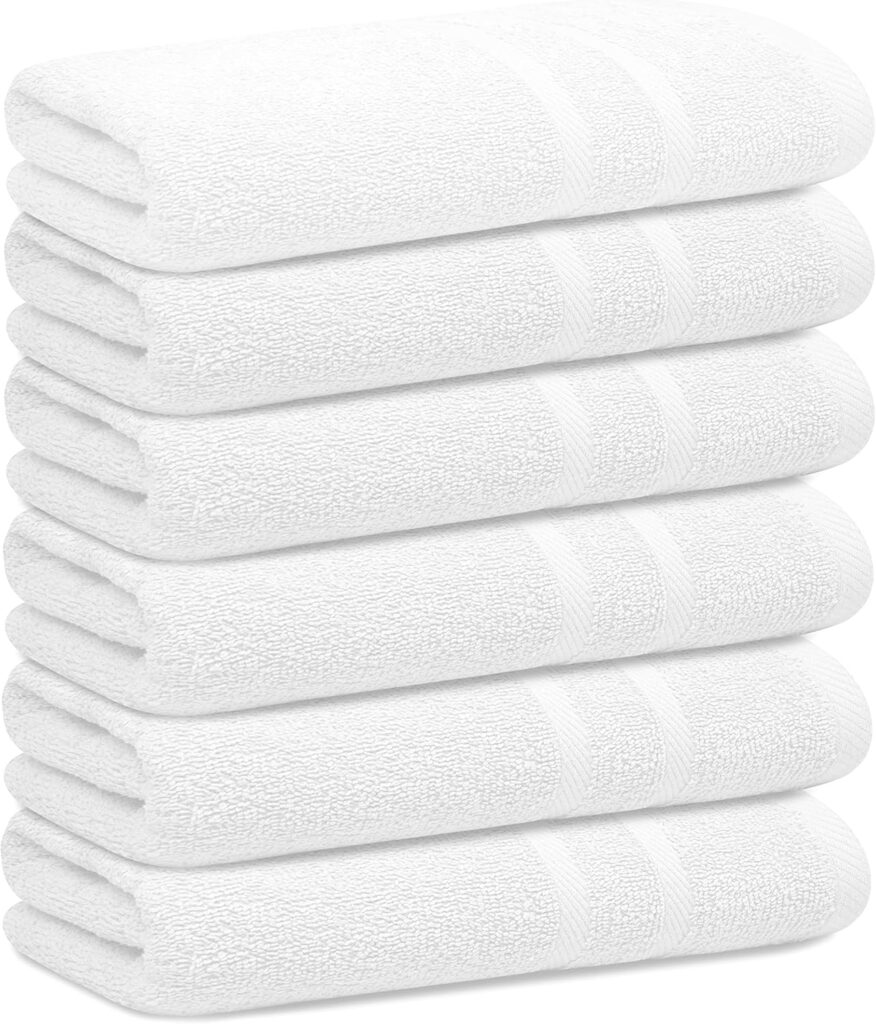
- 450–550 GSM The commercial sweet spot. This range balances absorbency, durability, and drying time. It is the most common weight used in mid-to-upper-tier hotels, spas, and healthcare facilities across the USA. A 500 GSM white terry bath towel absorbs well, holds its structure through repeated commercial laundering, and feels substantial to guests without requiring extended drying time.
- 600–900 GSM Luxury-grade and resort-quality. These towels offer exceptional softness and weight but cost significantly more per unit and take longer to dry. They are appropriate for boutique properties or treatment rooms where the tactile experience is part of the brand value, but not cost-efficient for high-volume, high-turnover operations.
Loop Length: The Hidden Quality Indicator
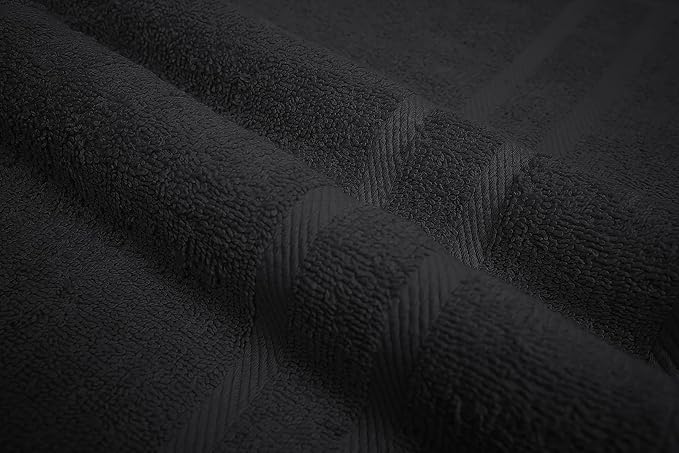
Loop length refers to how far the terry loops extend above the base fabric. It is rarely listed in supplier spec sheets, which is exactly why it matters.
Longer loops create a softer, more absorbent surface because there is more cotton fiber in contact with the skin and more surface area to capture moisture. However, longer loops are also more prone to snagging in industrial laundry equipment, particularly in facilities using commercial washers with agitator cycles.
Shorter, tighter loops are more durable under mechanical stress. They resist pilling, maintain a cleaner appearance over time, and hold their structure better through bleaching cycles a critical factor for white hotel towels that need to look bright and fresh after hundreds of washes.
When evaluating supplier samples, pull lightly at a corner of the terry surface. A well-anchored loop structure will resist the pull cleanly. Loose loops that stretch or release easily indicate a lower-density weave that will deteriorate faster in production-level laundry environments.
The best commercial terry constructions use a double-loop or ring-spun construction that balances both properties moderate loop height with a tight, secure base.
Fiber Composition: Cotton Grade and Blend Types
Not all cotton is equal, and not all white terry towels marketed as “100% cotton” deliver the same performance. The grade of cotton used, and how it is processed, determines softness, absorbency, and longevity.
- Combed cotton: A processing method that removes short, irregular fibers before spinning. The result is a smoother, more uniform yarn that produces a softer, more durable fabric. Combed cotton towels hold their softness longer than uncombed equivalents, which matters significantly in commercial settings where towels are washed in hot water with industrial detergents.
- Ring-spun cotton: The yarn is continuously twisted and thinned to produce a stronger, finer thread. Ring-spun towels are softer, more durable, and more absorbent than open-end spun alternatives. Most quality commercial suppliers in the USA source ring-spun cotton as their baseline standard.
- Turkish cotton (ELS): Extra long staple cotton with superior tensile strength and natural luster. Turkish cotton towels are highly regarded in the hospitality industry for their combination of durability and softness. They cost more per unit but justify the premium in long-cycle, high-end hospitality settings.
Cotton-polyester blends Typically 86% cotton / 14% polyester. Polyester adds structural durability and reduces drying time, which directly lowers energy costs in commercial laundry operations. However, blends tend to feel less soft over time and are less absorbent than pure cotton equivalents
For procurement teams sourcing white terry towels at scale, Looperry recommends requesting fiber certification documentation alongside samples not just a verbal assurance of cotton percentage. OEKO-TEX Standard 100 certification is a reliable third-party signal that the fiber meets tested quality and safety thresholds.
The Right Evaluation Framework for Bulk Orders
Before placing any large purchase order, commercial buyers should request a minimum sample set of 6–12 units per SKU and subject them to an in-house wash test. Run the samples through 20 industrial wash cycles using your facility’s standard detergent and temperature settings. Measure GSM before and after. Inspect for pilling, loop release, color yellowing, and dimensional shrinkage.
A towel that loses more than 5% of its GSM weight after 20 cycles or shows visible pilling will not hold up over a full operational lifespan. Any supplier unwilling to provide testable samples ahead of a bulk commitment is a supplier worth reconsidering.
Quality bath towels for commercial facilities are not a commodity purchase. They are an operational asset with a calculable cost-per-use. Evaluating them on GSM, loop construction, and fiber grade rather than price per unit alone is the framework that separates smart procurement from repeated replacement cycles.