Buying bathrobes for a commercial facility is nothing like shopping for one at home. When you are responsible for outfitting 80 hotel rooms, 12 spa suites, or a multi-location wellness chain, the decisions you make at the procurement stage determine your guest experience, your laundry costs, and your per-unit economics for the next two to three years. A wrong choice at volume is expensive to unwind.
The Waffle Bathrobe has become the dominant format in US commercial hospitality for a specific set of reasons and understanding those reasons is the starting point for making the right bulk purchasing decision. This guide walks through every stage of the B2B buying process, from spec evaluation to supplier qualification to order execution.
Why Waffle Weave Has Taken Over Commercial Hospitality
Terry robes dominated hotel and spa linen programs for decades, but waffle weave has steadily displaced them in mid-to-upper-tier US properties over the past ten years. The reasons are operational as much as aesthetic.
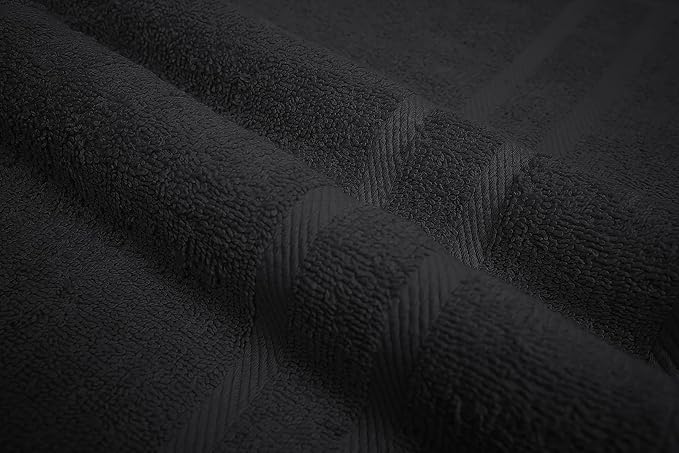
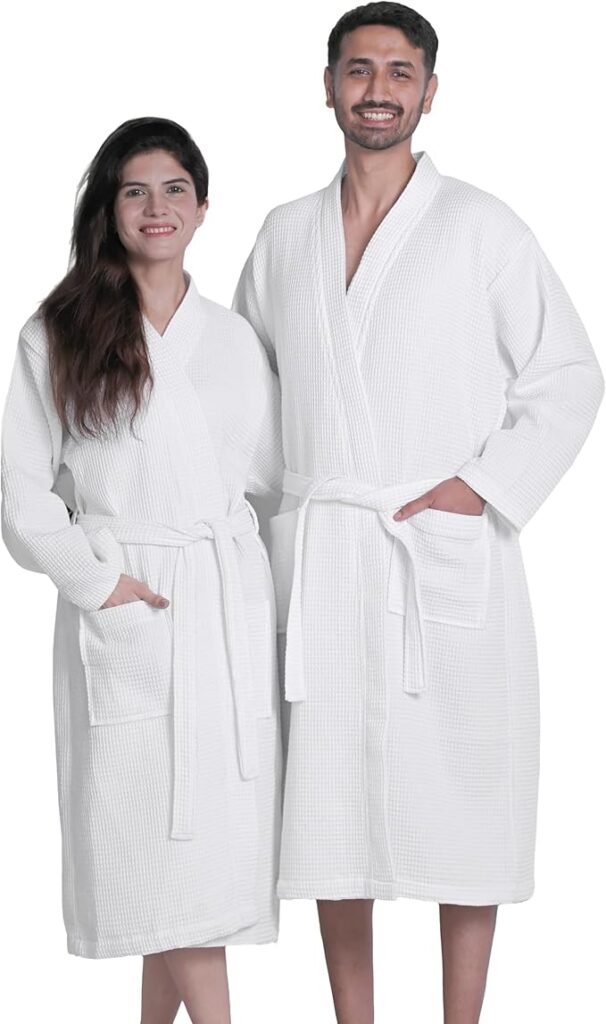
Waffle weave is constructed with a honeycomb pattern of recessed squares across the fabric surface. This creates a significantly larger surface area per unit of fabric weight than a flat or terry weave, which improves both air circulation and moisture absorption. For a guest stepping out of a shower or pool, a waffle robe dries the skin faster and releases its own moisture more quickly than a terry equivalent of the same weight.
For laundry operations, faster dry time translates directly into higher throughput per dryer cycle and lower energy costs per robe. In a full-service hotel running 300 robe cycles per week, even a 12-minute reduction in average dry time compounds into meaningful savings over a full operating year.
Waffle bathrobes have a lower GSM than terry robes of equivalent quality which makes them lighter, faster-drying, and easier to manage in commercial laundry. This is a feature, not a trade-off. In hospitality, lower GSM with higher air permeability outperforms heavier terry for daily-use linen programs.
Key Specifications to Evaluate Before Ordering
Every commercial bathrobe purchase decision should start with the spec sheet, not the price sheet. Here are the variables that determine real-world performance:Fabric weight (GSM): Commercial waffle bathrobes typically range from 180 to 300 GSM. The 200–250 GSM range is the hospitality sweet spot light enough for fast drying, substantial enough to feel premium in a guest’s hands. Below 180GSM tends to feel insubstantial; above 300 GSM loses the drying-speed advantage that makes waffle weave valuable.
Fiber content: 100% cotton is the standard for guest-facing hospitality. Cotton is hypoallergenic, handles repeated bleach washing without degrading rapidly, and softens with each wash cycle. Cotton-polyester blends cost less per unit but compromise the hand feel and absorbency that make waffle robes worth investing in.
Waffle cell depth: Deeper cell construction increases absorbency and air circulation. Shallower waffle patterns cost less to produce but underperform on the two metrics that matter most. Request fabric samples and compare cell depth against competing quotes.
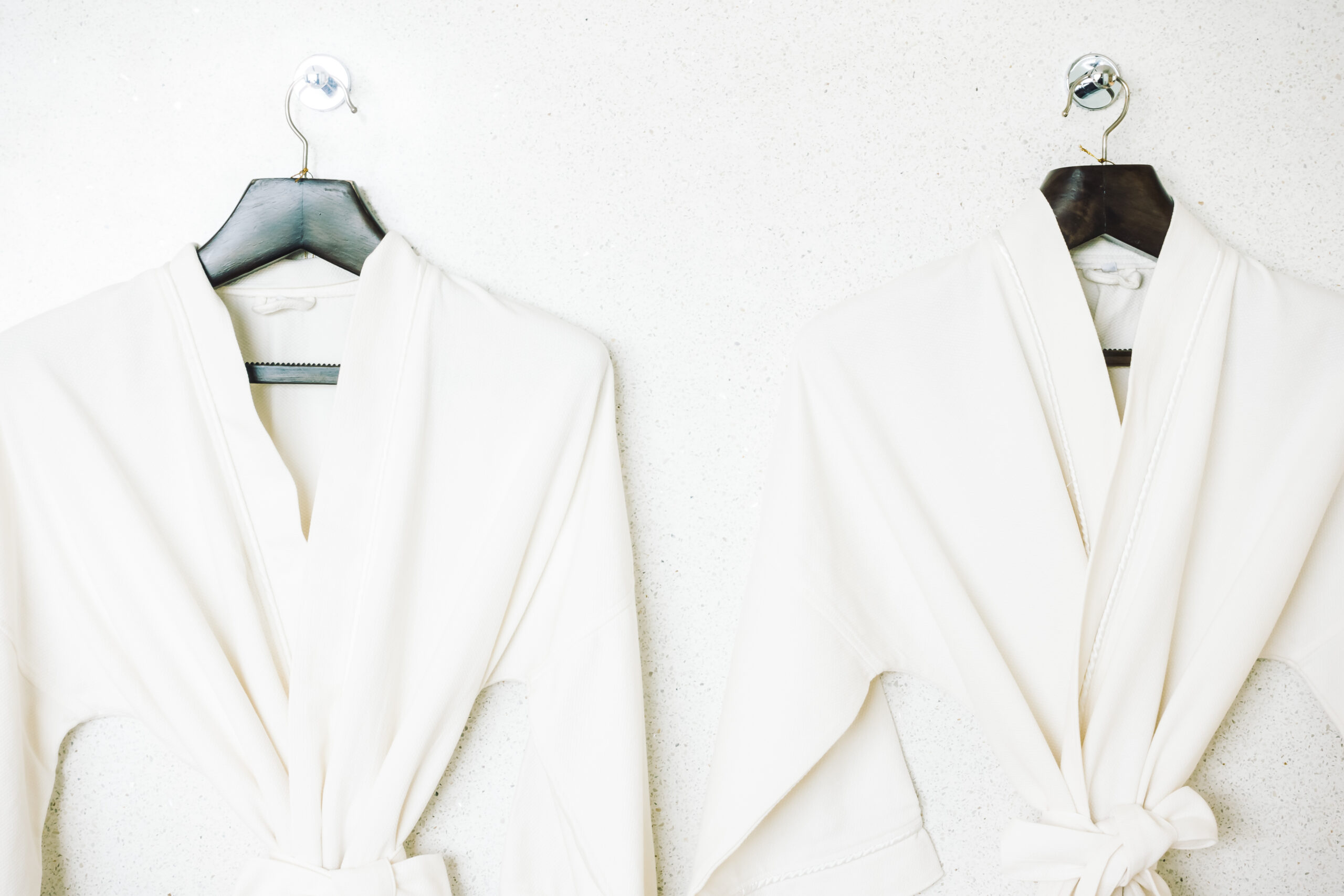
Shawl vs kimono collar: Shawl collars add warmth and a more upscale appearance preferred for spa and resort settings. Kimono collars are lighter and faster to launder, making them suitable for fitness and aquatic facilities. Specify the collar type in your RFQ to avoid receiving a mix.
Belt and loop construction: Double-stitched belt loops and a woven belt (rather than a sewn fabric strip) are markers of commercial-grade construction. Thin belt loops are the first point of failure in a robe under regular institutional laundry stress.
Sizing for Commercial Inventory
Unlike towels, bathrobe sizing has a meaningful impact on both guest satisfaction and inventory management. Most US commercial operators stock a one-size-fits-most (OSFM) design typically fitting US sizes S through XL supplemented by a plus-size option for inclusive programs.
| Size Category | Coverage | Recommended Allocation |
| Standard OSFM (S–XL) | Fits approx. 80% of guests | 70–75% of total par |
| Large / XL dedicated | Better fit for larger guests | 15–20% of total par |
| Plus size (XXL+) | Inclusive amenity program | 5–10% of total par |
For spa facilities with treatment rooms, a lightweight short robe (knee-length) is often stocked separately from a standard full-length option. Confirm your intended use case before specifying length in the purchase order.
Understanding MOQ and Pricing Tiers
Wholesale bathrobe suppliers in the USA typically operate on tiered pricing structures tied to minimum order quantities. Understanding these tiers before entering negotiations allows procurement teams to plan inventory cycles more effectively.
| Order Volume | Typical Unit Price Range | Lead Time |
| 50–150 units | $18–$28 per robe | 4–6 weeks |
| 150–500 units | $14–$20 per robe | 5–8 weeks |
| 500–1,000 units | $11–$16 per robe | 6–10 weeks |
| 1,000+ units | $8–$13 per robe | 8–12 weeks |
These ranges vary based on fiber grade, custom embroidery, and whether the order includes packaging. Always request an itemized quote a low per-unit price that includes hidden embroidery setup fees or non-standard packaging charges can close the gap with a higher-priced but fully inclusive supplier.
What to Require from Every Supplier Before Committing
Before placing any volume order, a complete supplier qualification should include:
- Product samples: A minimum of 3–5 units per SKU to evaluate construction quality, hand feel, and wash performance. Run them through at least 15 industrial wash cycles before approving.
- Fiber and certification documentation: OEKO-TEX Standard 100 certification confirms the fabric meets international safety standards for skin contact important for spa and healthcare settings.
- Production capacity confirmation: Verify the supplier can fulfill your full order volume within your required lead time and has capacity for reorders within 8 weeks.
- Bleach and wash-cycle test data: Require documentation that the robe maintains structural and color integrity through a minimum of 75 commercial wash cycles.
- Reference accounts: Request contact details for two or three existing US hospitality clients at comparable order volumes. A supplier unwilling to provide references deserves additional scrutiny.
Looperry‘s B2B wholesale program covers all five of these requirements with documentation available prior to sample dispatch designed for procurement teams that need to move efficiently through supplier qualification without delays.
Building a Par Level for Bathrobes
A three-par system one set in use, one in laundry, one in clean stock is the standard operating model. For a 100-room full-service hotel with robes in every room: 100 rooms × 2 robes × 3 par = a minimum inventory of 600 robes before accounting for inspection holds, seasonal attrition, or amenity upgrades. Build in a 10–15% buffer on top of the base par calculation for any property with a spa, pool, or fitness center, where robe demand extends beyond in-room use.