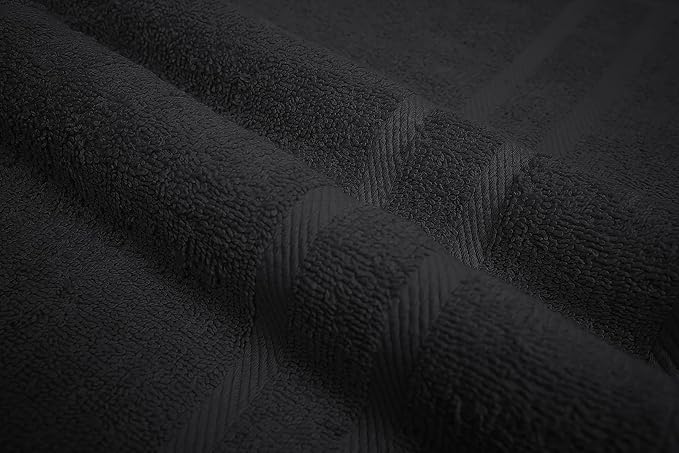
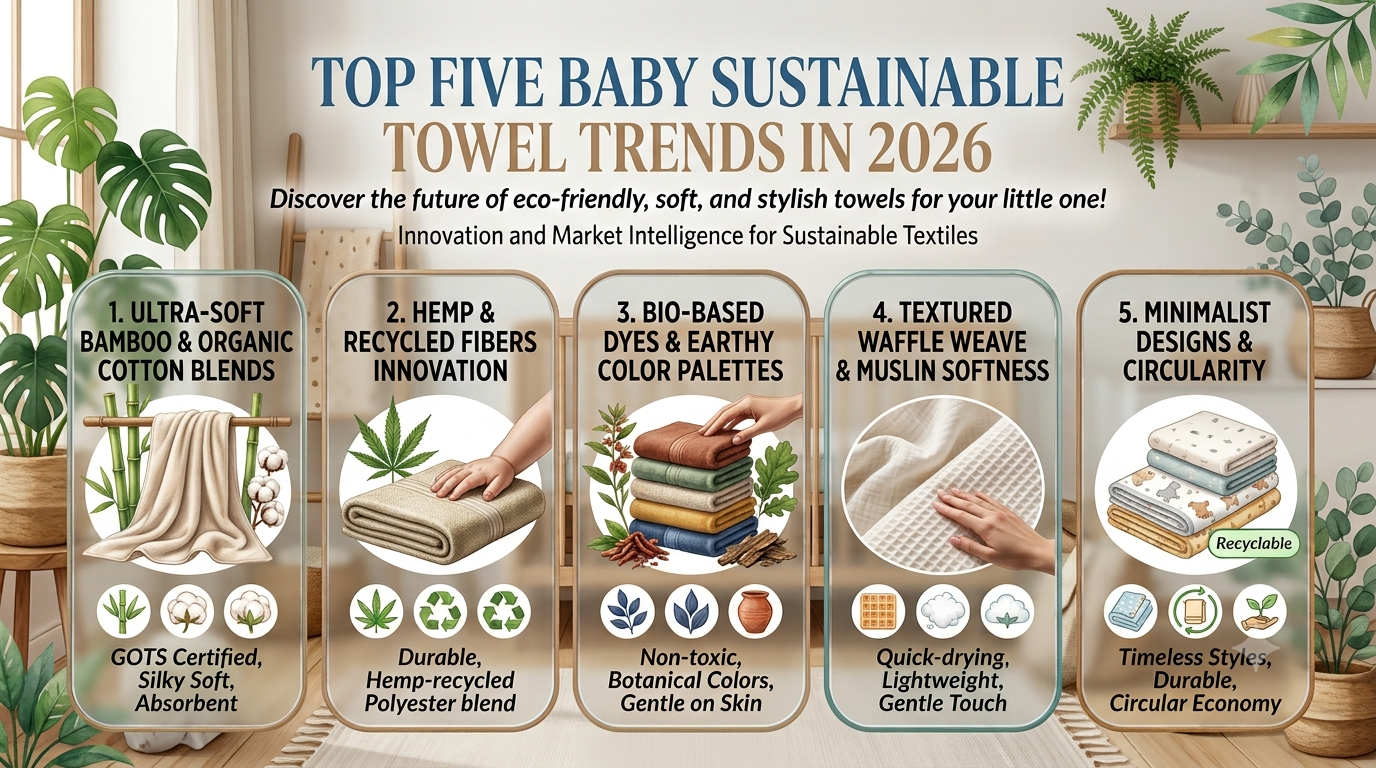
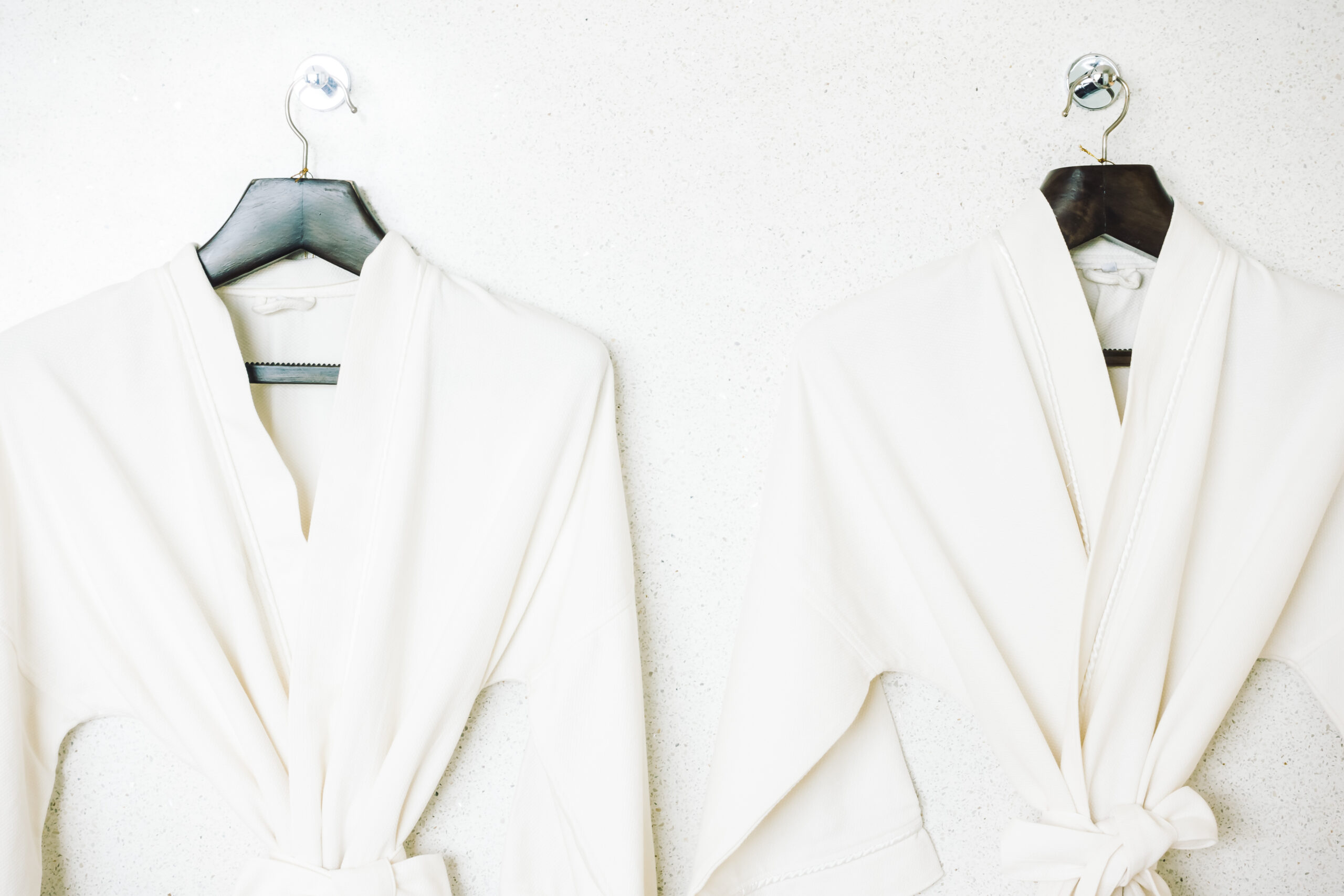
Towels in a gym or fitness center environment face conditions that are dramatically more demanding than those in a hotel room. They are used multiple times per day, laundered in high-frequency commercial cycles, exposed to body oils and chlorine, and handled by members who rarely treat shared equipment gently. A towel that holds up well in hospitality will not necessarily survive six months on a gym floor.
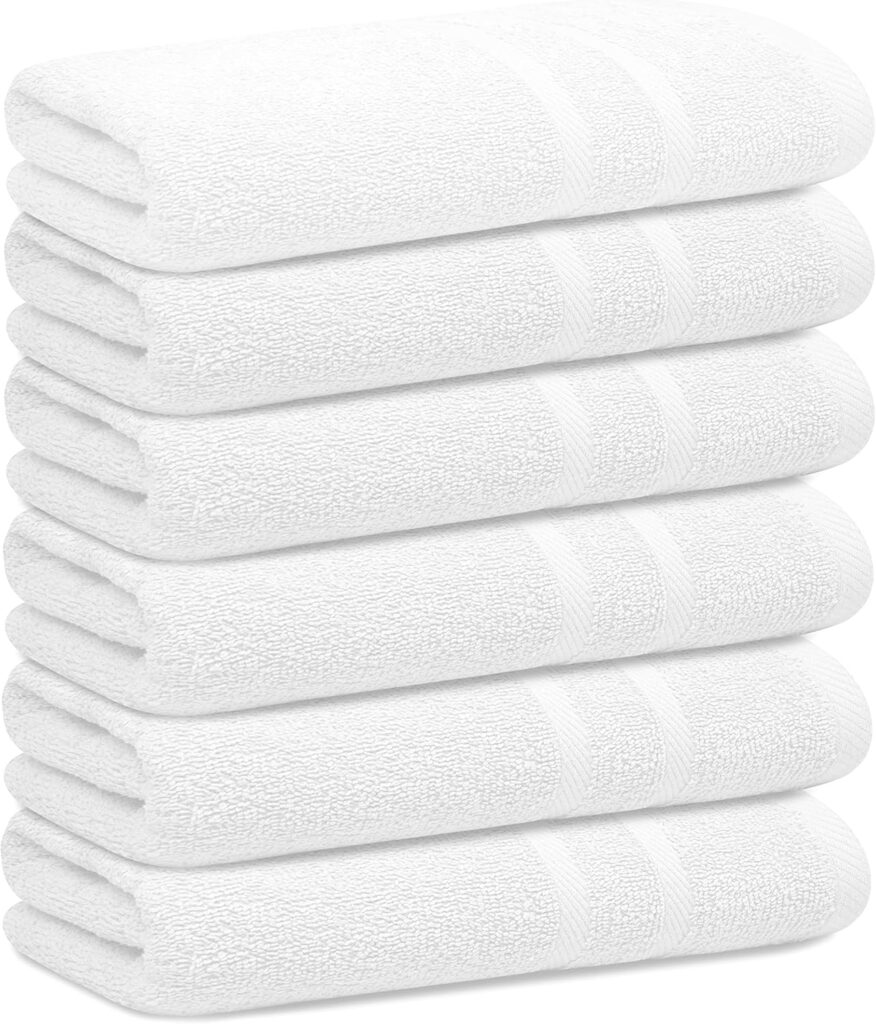
If you are sourcing white terry bath towels for a fitness facility whether a single-location studio or a multi-site health club chain the buying criteria are materially different from other commercial verticals. This checklist covers every specification your procurement team should validate before placing a bulk order.
Why Gyms Are the Hardest Use Case for Commercial Towels
No commercial environment cycles towels harder. A mid-sized fitness center with 500 active daily members may process 800–1,200 towel uses per day. Each towel potentially contacts exercise equipment, pool or sauna environments, body sweat, sunscreen, and grooming products before reaching the laundry. Industrial washers in gym laundry rooms often run at higher temperature settings and more frequent cycles than hotel equivalents, which accelerates fiber breakdown and color degradation.
The specific performance requirements this creates are short drying time, high resistance to repeated hot-water and bleach cycles, fast moisture absorption during use, and durability against aggressive mechanical washing — all while maintaining a presentable white appearance for member-facing service.
The Checklist: 8 Specs to Verify Before You Order
1. GSM Range: 300–450 for gym use
Higher GSM towels take longer to dry. In a gym laundry operation cycling towels multiple times per day, a 600 GSM luxury towel creates a throughput bottleneck. The optimal range for fitness facilities is 350–450 GSM absorbent enough for post-workout use, light enough to dry in a standard commercial dryer cycle without holding up the next batch.
2. Fiber: Ring-Spun Cotton or 86/14 Blend
Ring-spun 100% cotton offers the best absorbency and holds up well under bleach cycles. A cotton polyester blend (86/14) is a defensible alternative for gyms prioritizing drying speed and reduced energy costs. Avoid microfiber or waffle-weave towels they perform poorly under repeated bleach washing and degrade quickly in abrasive commercial laundry cycles.
3. Bleach Tolerance: Minimum 100 Cycles
Fitness center towels should maintain whiteness through at minimum 100 bleach wash cycles. Request documented bleach-tolerance test results from your supplier. Any supplier unable to provide this data is not testing their product to a standard appropriate for gym procurement.
4. Loop Density: Tight Construction Required
Gym members are not gentle with shared towels. Loose loop construction deteriorates rapidly under mechanical stress and frequent use. Prioritize tight, low-pile terry with reinforced double-stitched edges. The edge finishing is particularly important a towel that begins fraying at the hem within the first 30 cycles creates a visual quality problem that reflects on your facility’s standards.
5. Size Specification: Standardize Across Your Inventory
Most gym and fitness center towels fall into two functional categories: a standard hand or sport towel (16″ × 27″ or 16″ × 30″) for gym floor use, and a full-size bath towel (27″ × 54″) for locker room showers and pool access. Standardizing on consistent sizing across your order prevents folding and stacking inconsistencies in the linen room and simplifies your par-level tracking.
6. Shrinkage Tolerance: Under 5% After 20 Washes
High-heat gym dryers accelerate dimensional shrinkage. Towels that shrink significantly after initial washes create storage and inventory inconsistencies. Request third-party shrinkage test data and run your own in-house wash test on samples before committing to volume. A maximum 5% dimensional shrinkage after 20 industrial wash cycles is the acceptable commercial benchmark.
7. Chlorine and Chemical Resistance
If your facility includes a pool or hot tub, towels will regularly contact chlorinated water. Chlorine degrades cotton fiber at an accelerated rate compared to standard laundry exposure. Confirm with your supplier whether their white terry hotel towels or fitness-grade towels have been tested against chlorine exposure, and factor higher replacement rates into your cost-per-use calculations for pool-adjacent inventory.
8. Minimum Order Quantity and Reorder Lead Time
High-cycle gym environments consume towels faster than almost any other commercial setting. Confirm your supplier’s MOQ, standard lead time, and ability to accommodate emergency reorders during peak membership periods (January, September). A supplier with a 10-week lead time is a liability for a high velocity fitness operation.
Estimating Par Levels for Fitness Facilities
| Facility Type | Daily Towel Uses | Recommended Par |
| Boutique studio (under 100 members/day) | 150–300 | 600–900 towels |
| Mid-size gym (100–300 members/day) | 400–800 | 1,600–2,400 towels |
| Large health club (300–600 members/day) | 900–1,800 | 3,600–5,400 towels |
| Multi-facility chain (per location) | Varies | Apply 3-par formula per site |
The three-par formula (in-use + in-laundry + clean stock) is the reliable baseline. For gym environments with pool access, add a 15–20% buffer to account for higher-than-average per-session usage and chlorine-accelerated replacement cycles.
Gym towels are not a commodity SKU. Buying based on price per unit without validating GSM, bleach tolerance, loop construction, and shrinkage rate is the fastest path to a six-month replacement cycle and a linen budget that never stabilizes.
Looperry offers fitness-grade white terry towels specified for high-frequency commercial laundry environments, available in sport and full bath sizes with GSM certification and bleach-tolerance documentation included with every bulk order. Sourcing the right towel for your facility type is not a minor operational detail. In a gym, it directly affects member experience, laundry throughput, and your total annual linen cost. The checklist above gives your procurement team the framework to evaluate suppliers on the metrics that actually determine long-term performance.