If you manage linen procurement for a high-turnover facility a hotel chain, fitness center, hospital, or resort you have almost certainly faced this decision: do you invest in 100% cotton bath towels, or does a cotton-polyester blend make more operational sense at your volume and budget?
The answer is not universal. It depends on your laundry infrastructure, your guest experience standards, your replacement cycle expectations, and how you calculate cost-per-use across your linen inventory. This guide breaks down both options across the variables that actually matter for B2B buyers operating at scale in the United States.
The Case for 100% Cotton in Commercial Settings
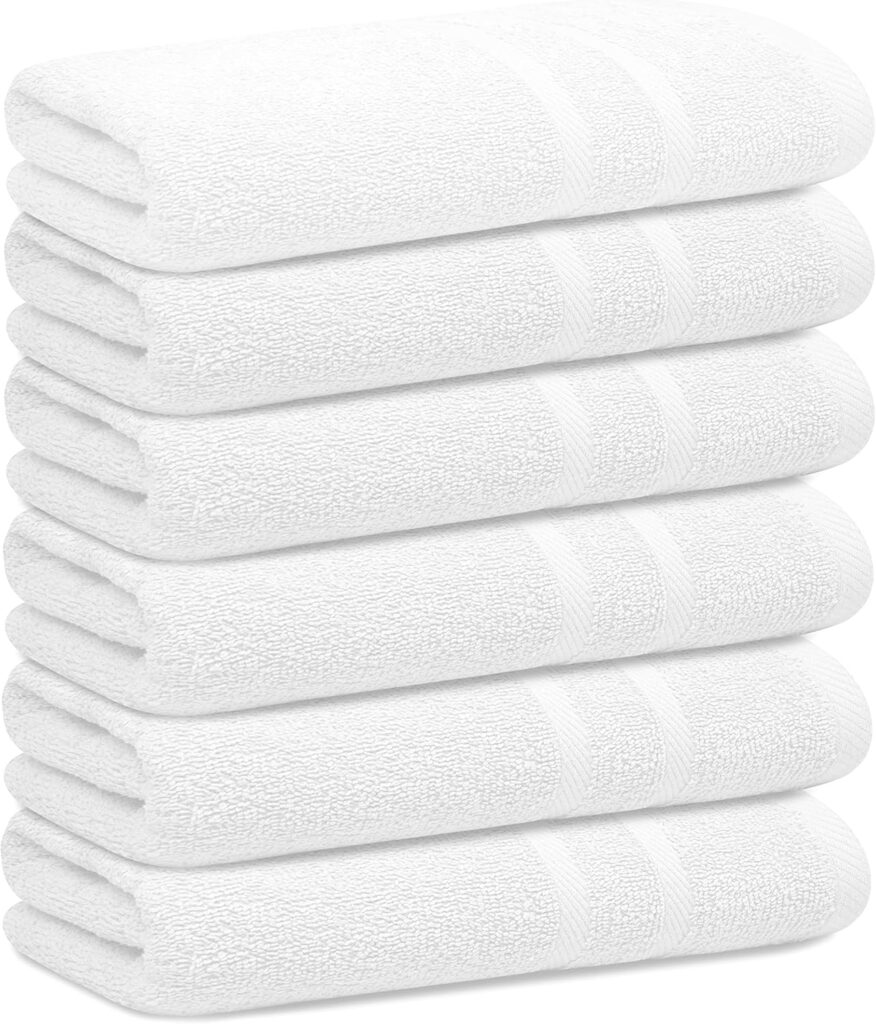
Pure cotton has been the standard for commercial terry towels for decades, and for good reason. The fiber is naturally hydrophilic it absorbs moisture faster and more completely than synthetic alternatives. For any facility where the primary function of a towel is to dry a person quickly and comfortably, cotton’s absorbency advantage is meaningful and consistent.
The tactile experience is also a significant factor. Cotton softens with each wash cycle rather than hardening, which means a well-made 100% cotton terry towel becomes more comfortable over its lifespan, not less. Guests at mid-tier to premium hotels in the USA have a baseline expectation of soft, plush hotel towels, and cotton delivers that expectation reliably in a way that blended fabrics struggle to match.
Where 100% cotton excels:
- Luxury and upper-upscale hotels where guest experience is a brand differentiator.
- Spa treatment rooms and wellness facilities where softness is integral to the service.
- Healthcare environments requiring high-temperature washing with bleach-based disinfectants (cotton tolerates this better than blends over time).
- Facilities with energy-efficient laundry systems that can absorb the longer drying time.
Where 100% cotton faces pressure:
- High-volume, fast-cycle laundry operations where drying time directly affects throughput.
- Budget operations with compressed per-towel cost targets.
- Facilities in humid climates where slow-drying towels increase mildew risk in storage.
The Case for Cotton-Polyester Blend Towels
Blended towels typically formulated at an 86/14 or 80/20 cotton-to-polyester ratio were developed specifically to address operational challenges that pure cotton creates in commercial laundry environments.
The addition of polyester serves three practical purposes. First, it reduces drying time. Polyester does not absorb water the way cotton does, which means blended towels release moisture faster in dryers, shortening cycle time and reducing energy consumption per load. For a facility running 500 towel loads per week, even a 10-minute reduction in average dry cycle time produces meaningful operational savings over a year.
Second, polyester adds structural stability. Blended towels resist shrinkage more effectively than all-cotton alternatives, keeping dimensional specs consistent across your inventory. Third, blends often come at a lower per-unit cost, which improves initial procurement economics though this advantage narrows when you factor in the full cost-per-use calculation over the towel’s lifespan.
Where blends perform well:
- Budget hotels, extended-stay properties, and motels where laundry speed is a key efficiency metric.
- Athletic clubs, gyms, and aquatic centers where towels cycle through laundry multiple times per day.
- Facilities with older dryers where reducing load time directly reduces utility costs.
- Operations with compressed procurement budgets that require a lower unit price at volume.
Side-by-Side: Key Metrics for Procurement Decisions
| Factor | 100% Cotton | Cotton-Poly Blend |
| Absorbency | High | Moderate |
| Softness over time | Improves with washing | Stable but less soft |
| Drying time | Longer | Faster (15–25% reduction) |
| Durability (wash cycles) | 150–300+ washes | 200–350+ washes |
| Bleach/heat tolerance | High | Moderate |
| Initial cost per unit | Higher | Lower |
| Cost-per-use (long-term) | Comparable | Comparable |
| Eco-certification eligibility | High | Limited |
| Guest experience perception | Premium | Functional |
How to Make the Right Call for Your Operation
The correct answer starts with your laundry throughput data, not a preference. Pull your average daily towel count, your average dry cycle time, and your current replacement rate. If drying throughput is a bottleneck in your operation, a blend will relieve that constraint. If guest satisfaction scores are tied to linens, cotton protects your brand equity.
For multi-property operators, a tiered strategy is often the most defensible: use 100% cotton terry for premium or branded properties, and a quality cotton-polyester blend for budget-category or high-velocity locations. Looperry supplies both formats at commercial volumes with matched GSM specifications so your par-level systems stay consistent across properties.
The most common procurement mistake is treating all white terry towels as interchangeable. The fiber decision you make today will affect laundry throughput, guest scores, replacement frequency, and total linen cost for the next two to three years. Evaluate your operation first. Then choose your fiber.