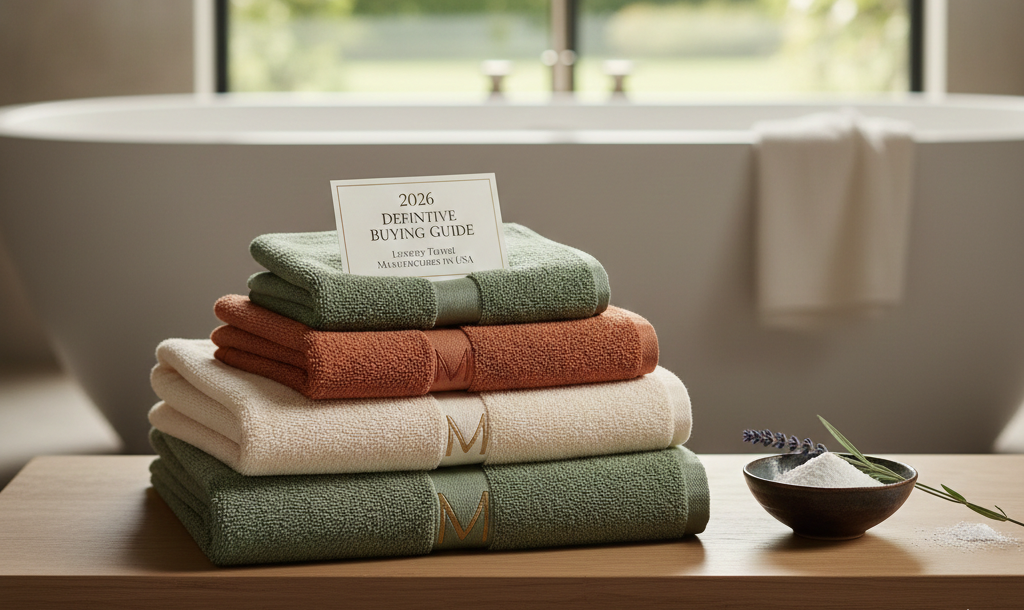
Luxury towels are not impulse purchases. In the United States, buyers whether homeowners, interior designers, hoteliers or procurement managers expect performance, longevity, and credibility. Search interest around luxury towel manufacturers continues to grow, but very few resources explain what actually separates true luxury manufacturers from mass market suppliers using premium language.
This guide is written to outperform generic content. It is technical where it needs to be, practical where it matters, and transparent throughout. If you want to understand luxury towel manufacturing at a level that helps you buy better, source smarter, or build a stronger brand, this article is for you.
What “Luxury” Really Means in Towel Manufacturing
Luxury in towels is not defined by packaging, influencer marketing, or inflated GSM claims. It is defined by repeat performance after use.
True luxury towel manufacturers excel across five non negotiables:
- Fiber quality (cotton length, purity, sourcing)
- Yarn engineering (twist level, spinning method)
- Weaving precision (loop density, pile structure)
- Finishing discipline (pre-shrinking, enzyme washing)
- Quality control consistency (batch to batch uniformity)
Manufacturers who compromise on any one of these produce towels that may feel good on day one and disappoint by month three.
Cotton Is the Core: Understanding Fiber at a Manufacturing Level
Every luxury towel starts with cotton, but not all cotton is equal. The defining factor is fiber length.
Long Staple vs Short Staple Cotton
- Short-staple cotton: cheaper, rougher, breaks faster, sheds lint
- Long-staple cotton: smoother yarns, stronger loops, better absorption
Luxury towel manufacturers almost exclusively use long staple or extra long staple fibers.
Premium Cotton Types Used by Luxury Manufacturers
Egyptian Cotton
Renowned for extra long fibers and natural softness. High absorbency, excellent durability, and a smooth hand feel when properly spun.
Supima® Cotton
U.S.-grown, trademark protected cotton representing the top ~1% of global cotton production. Stronger than standard cotton, resistant to pilling, and ideal for premium domestic brands.
Organic Cotton
Grown without synthetic pesticides or fertilizers. Increasingly demanded by U.S. consumers prioritizing sustainability. Organic luxury towels require even stricter manufacturing discipline to maintain durability.
Luxury manufacturers disclose cotton type clearly. Vague claims like “premium cotton blend” are red flags.
GSM Explained Properly (And Why Higher Isn’t Always Better)
GSM grams per square meter is one of the most misunderstood towel metrics online.
| GSM Range | Classification | Real-World Performance |
| 400–500 | Standard | Lightweight, quick-dry, limited plushness |
| 550–650 | Premium | Balanced softness, daily home use |
| 650–750 | Luxury | Plush feel, strong absorbency |
| 750–900 | Ultra-Luxury | Spa & hotel grade, maximum comfort |
Important: GSM alone does not equal quality. A poorly spun 800 GSM towel can underperform a well-engineered 650 GSM towel. Luxury manufacturers optimize fiber length + yarn twist + loop density, not just weight.
Yarn Technology: Where Real Luxury Is Engineered
Most consumers never hear about yarn twist but manufacturers obsess over it.
Ring-Spun Yarns
Used by premium and luxury towel manufacturers. Ring spun yarns are:
- Smoother
- Stronger
- Less prone to linting
- More absorbent
Low Twist vs Zero Twist
- Low twist yarns: balance softness and durability (preferred for long term use)
- Zero-twist yarns: extremely soft initially, but weaker over time
Top manufacturers use controlled low twist technology to deliver softness that lasts years not weeks.
Weaving & Construction: Why Towels Fail or Succeed
Luxury towels are defined by their pile construction.
Key factors manufacturers control:
- Loop height consistency
- Double loop reinforcement
- Edge binding density
- Selvage stitching strength
Poorly constructed edges are the #1 reason towels fray early. Luxury manufacturers reinforce hems specifically for repeated washing and drying.
Finishing Processes That Separate Premium From Average
After weaving, towels undergo finishing. This step determines how towels behave after washing.
High-end manufacturers invest in:
- Enzyme washing (reduces loose fibers)
- Pre shrinking (prevents distortion)
- Low impact dye fixation (colorfastness)
- Lint reduction cycles
Manufacturers that skip finishing produce towels that shed excessively, fade quickly, and lose softness.
Color Science in Luxury Towels
Luxury towel colors are not accidental. They are engineered.
Top manufacturers:
- Use reactive dyes that bond at a molecular level
- Test for color bleeding and wash stability
- Balance dye depth with fiber integrity
This is why true luxury whites stay bright, and deep neutrals (charcoal, sand, taupe) do not fade unevenly.
Sustainability Standards in Modern Luxury Manufacturing
In the U.S. market, sustainability is no longer optional it is a purchasing factor.
Leading luxury towel manufacturers now align with:
- OEKO-TEX® Standard 100
- Low-water dyeing processes
- Ethical labor compliance
- Reduced chemical finishing
Sustainable manufacturing is increasingly tied to brand trust and long term valuation, not just ethics.
Hospitality vs Residential Luxury Towels
Not all luxury towels are designed the same.
Hotel & Spa Towels
- Extremely high durability
- Optimized for industrial laundering
- Slightly denser loops
- Consistent sizing across batches
Residential Luxury Towels
- Softer hand feel
- Design forward color palettes
- Balanced weight for home dryers
- Emphasis on comfort over industrial durability
Manufacturers capable of serving both markets demonstrate superior process control.
Private Label vs Branded Luxury Towel Manufacturers
Many U.S. luxury towels come from the same factories but branding, QC, and specification discipline make the difference.
Private label suppliers often:
- Reuse generic specifications
- Change yarn blends based on cost
- Lack long term consistency
Strong luxury brands lock:
- Fixed cotton origin
- Fixed GSM tolerances
- Fixed finishing protocols
- Strict rejection standards
This is where brand trust is earned.
How U.S. Buyers Should Evaluate Luxury Towel Manufacturers
Before choosing a manufacturer or brand, evaluate these criteria:
- Material transparency (exact cotton type disclosed)
- Technical specs (GSM, yarn type, construction)
- Care performance (after 50+ washes)
- Batch consistency
- Brand accountability
If a brand cannot answer technical questions, it is not luxury regardless of price.
Why Looperry Represents a New Standard in Luxury Towels
Looperry was built around the idea that modern luxury should be measurable, honest, and repeatable.
Instead of overusing buzzwords, Looperry focuses on:
- High GSM long staple cotton towels
- Controlled low twist yarn engineering
- Clean, timeless aesthetics suited for U.S. homes
- Hospitality grade durability with residential softness
- Quality consistency across every production run
Looperry’s approach aligns with what experienced buyers actually care about: how towels feel after months of use, not minutes in a showroom.
Care Engineering: How Luxury Towels Are Designed to Be Used
Luxury towel manufacturers design products with specific care assumptions:
- Cold or warm wash cycles
- Minimal detergent
- No fabric softeners (they coat fibers)
- Low tumble dry or line dry
Well engineered towels get softer over time, not flatter.
Pricing Reality: Why Luxury Costs More
Luxury towels cost more because:
- Long staple cotton is expensive
- Yield loss from strict QC is high
- Manufacturing cycles are longer
- Rejected batches are discarded, not discounted
If a towel is priced like mass market, it was likely manufactured like mass market.
Final Thoughts: Choosing the Best Luxury Towel Manufacturer
The luxury towel category is crowded with claims and light on truth. The manufacturers that deserve attention are those that:
- Disclose materials clearly
- Engineer for long term use
- Maintain strict production discipline
- Respect informed buyers
For U.S. consumers and professionals alike, luxury is no longer about excess it is about precision and trust. Brands like Looperry reflect this shift, proving that when manufacturing is done right, luxury becomes something you feel every single day.
FAQs About Luxury Towel Manufacturers
What do luxury towel manufacturers use for cotton?
Luxury towel manufacturers typically use long-staple or extra long staple cotton such as Egyptian cotton, Supima® cotton, or certified organic cotton. These fibers produce softer, stronger, and more absorbent towels compared to standard cotton.
What GSM is considered luxury for towels?
Luxury towels usually range between 600 and 900 GSM. Towels in this range provide a balance of plushness, absorbency, and durability. However, GSM alone does not determine quality—fiber type and construction matter more.
Are luxury towels worth the higher price?
Yes. Towels from high quality luxury towel manufacturers last significantly longer, maintain softness after repeated washing, and offer superior absorbency, making them more cost effective over time.
How long do luxury towels last?
With proper care, towels made by premium luxury towel manufacturers can last 5 to 10 years in residential use.
What is the difference between hotel towels and home luxury towels?
Hotel towels are designed for industrial laundering and durability, while home luxury towels prioritize softness, aesthetics, and comfort for daily use.
How do I choose the best luxury towel manufacturer in the USA?
Look for manufacturers that clearly disclose cotton type, GSM, yarn construction, finishing process, and quality certifications. Transparency is a strong indicator of true luxury manufacturing.